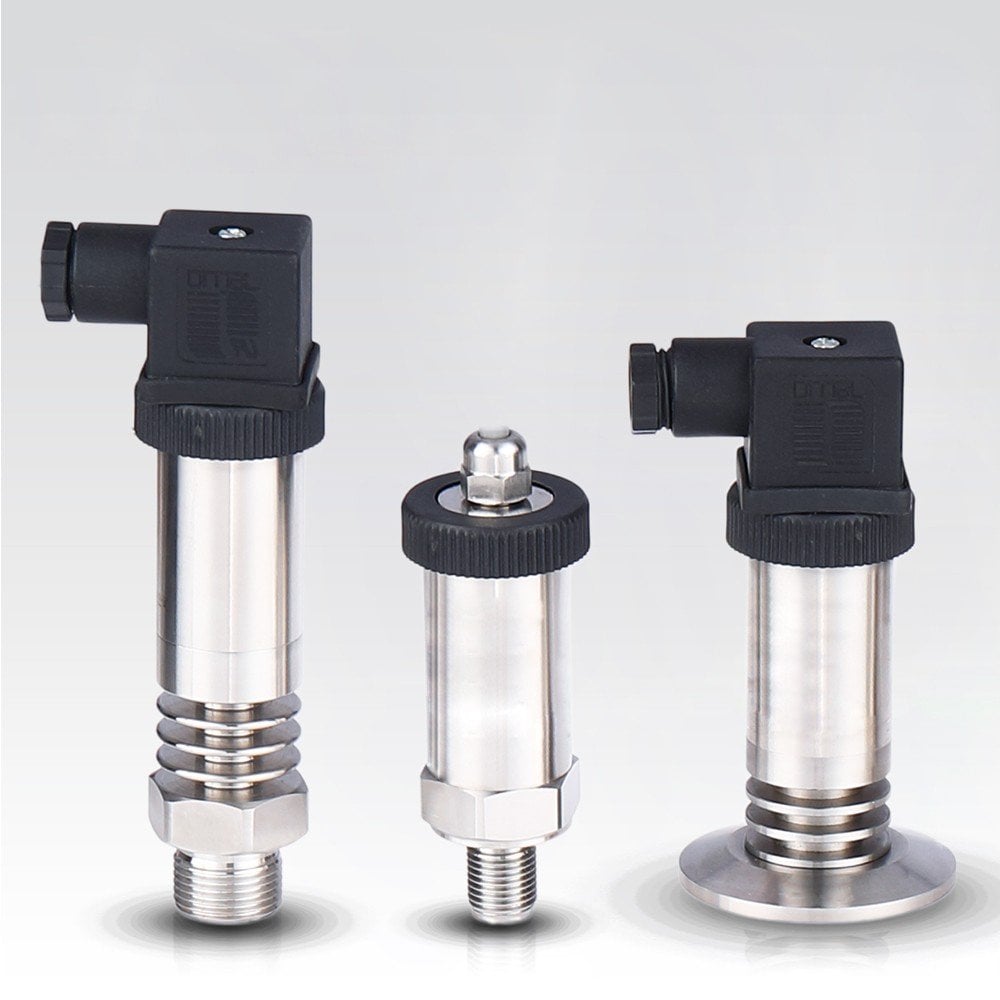
Flush Diaphragm Pressure Transmitter
Connection: R1/2” - Measurement range: -1 ...100 bar - Accuracy: 0.5% - Output: 4-20mA
A pressure transmitter is an industrial sensor that measures pressure in a system and converts it into an electrical signal (typically 4–20 mA or 0–10 V). It plays a critical role, particularly in process control, automation, and industrial facilities.
How does a pressure transmitter work?
A pressure transmitter basically operates in three stages:
- It detects pressure (via a sensor diaphragm).
- It converts physical pressure into an electrical signal.
- This signal is transmitted to the PLC, SCADA, or control system.
For example:
- A transmitter that operates in the 0–10 bar range.
- 0 bar → 4 mA
- 10 bar → produces a 20 mA signal.
Main Types of Pressure Transmitters
1. Absolute Pressure Transmitter
- Reference: Vacuum (0 bar)
- Application: Closed systems, vacuum applications.
2. Relative (Gauge) Pressure Transmitter
- Reference: Atmospheric pressure
- Application: Tank and pipeline pressure measurement.
3. Differential Pressure Transmitter
- It measures the pressure difference between two points.
- Applications: Filter clogging, flow rate measurement.
Where are pressure transmitters used?
- Chemical and petrochemical plants
- Water purification systems
- Steam boilers
- Food and pharmaceutical production
- Hydraulic and pneumatic systems
Advantages of Pressure Transmitters
- High accuracy
- Long life
- Durability in industrial environments.
- Easy integration with automation systems.
What to Consider When Choosing a Pressure Transmitter ?
- Pressure range (bar, psi)
- Medium (gas, liquid, corrosive)
- Temperature resistance
- Output signal (4–20 mA, HART, etc.)
- Connection type (threaded, flanged)
- Ex-proof requirement (for explosive environments)