Explosion-proof Thermal Air Speed Transmitter
Explosion-proof thermal air velocity transmitters , designed for measuring air velocity and flow rate in explosive environments (Zone 0, 1, or 2), are critical for the safety and precise data monitoring of industrial facilities.
These devices generally operate on the principle of thermal anemometry and, because they have no moving parts, offer high accuracy even at low speeds.
Working Principle
Thermal air velocity sensors utilize the "Constant Temperature Differential" principle. The sensor tip contains two resistive temperature detectors (RTDs):
- Reference Sensor: Measures the ambient temperature.
- Heated Sensor: Kept at a specific temperature above the ambient temperature.
As the airflow passes over the heated sensor, it cools it. The device measures the electrical energy required to maintain the temperature difference; this amount of energy is directly proportional to the air velocity (v) and mass flow rate.
Technical Specifications and Selection Criteria
When selecting or installing an explosion-proof transmitter, the following details should be considered:
1. Protection Class and Certification
- ATEX / IECEx: Compliance with European and international standards (e.g., II 2G Ex db IIC T6 Gb).
- Housing: Typically made of corrosion-resistant stainless steel (316L) or epoxy-coated cast aluminum.
2. Measurement Range and Output Signals
- Speed Range: Typically configurable over a wide scale from 0.1 m/s to 40 m/s.
- Output: In addition to standard 4−20 mA or 0−10 V signals, modern devices offer an RS485 Modbus RTU digital communication option.
- Unit Conversion: Devices are generally capable of directly converting velocity (m/s) to volumetric flow rate (m³/h).
3. Assembly and Connection
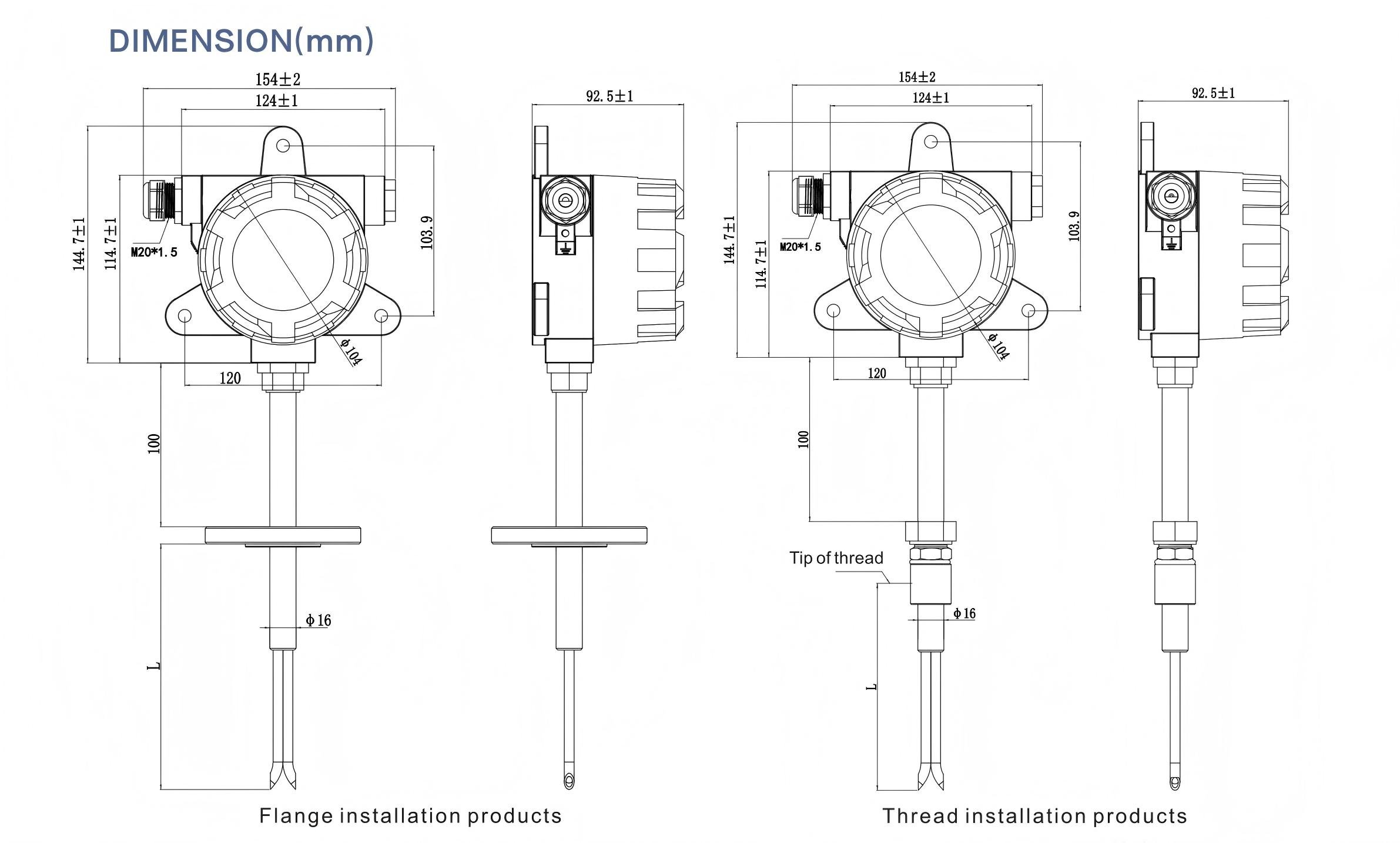
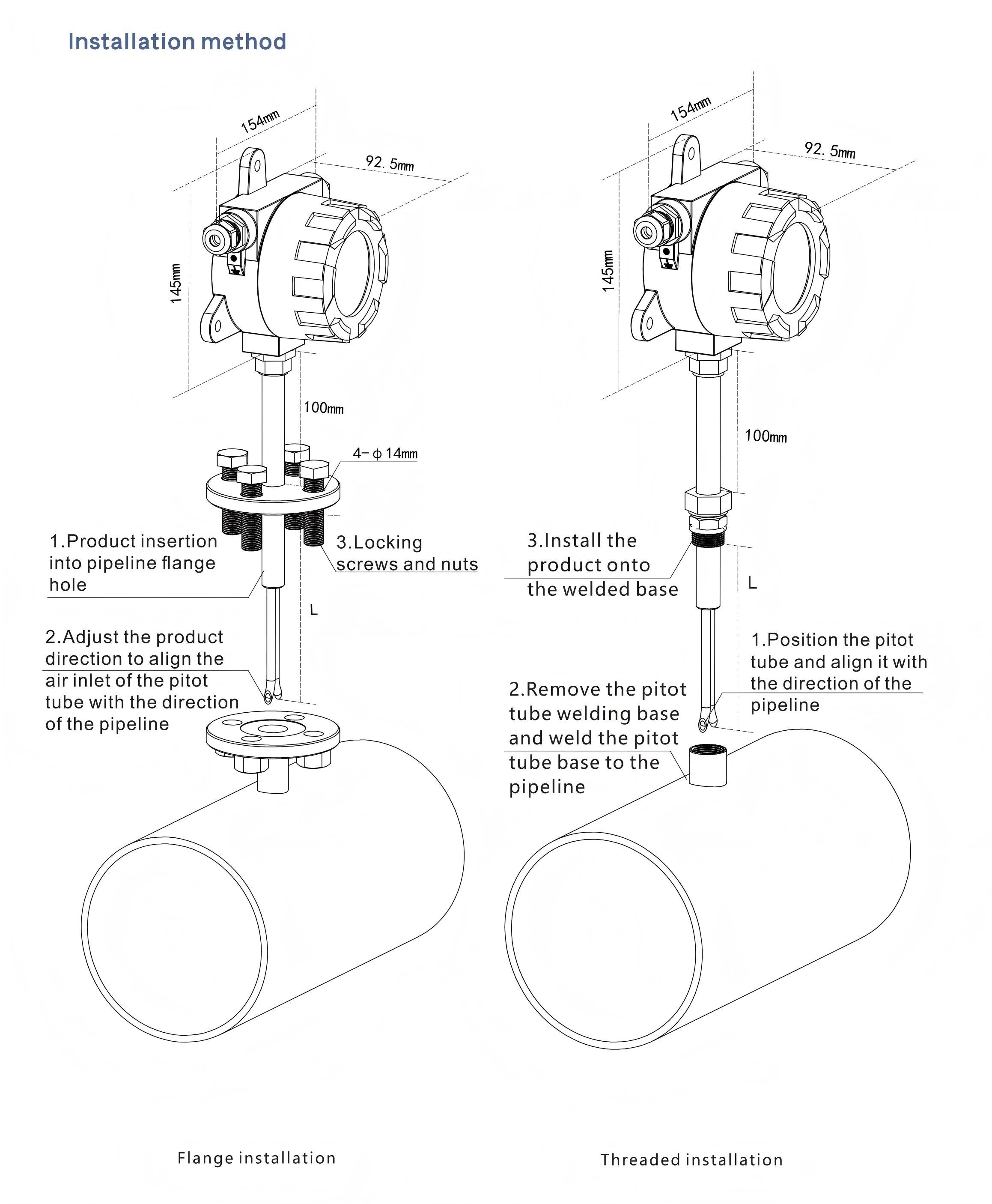
- Probes: Immersion probes of different lengths are used depending on the channel type.
- Connection: Process connections are generally threaded (NPT/G) or flanged. Appropriate cable glands, such as Ex-proof PG7 or PG9, must be used for cable entry.
Application Areas
- Chemistry and Petrochemicals: Monitoring ventilation of reaction tanks.
- Paint Booths: Controlling air circulation in environments containing flammable solvent vapors.
- Mining: Measurement of clean air supply in areas at risk of methane gas.
- Pharmaceutical Industry: Airflow velocity control in production areas with a risk of dust explosions.